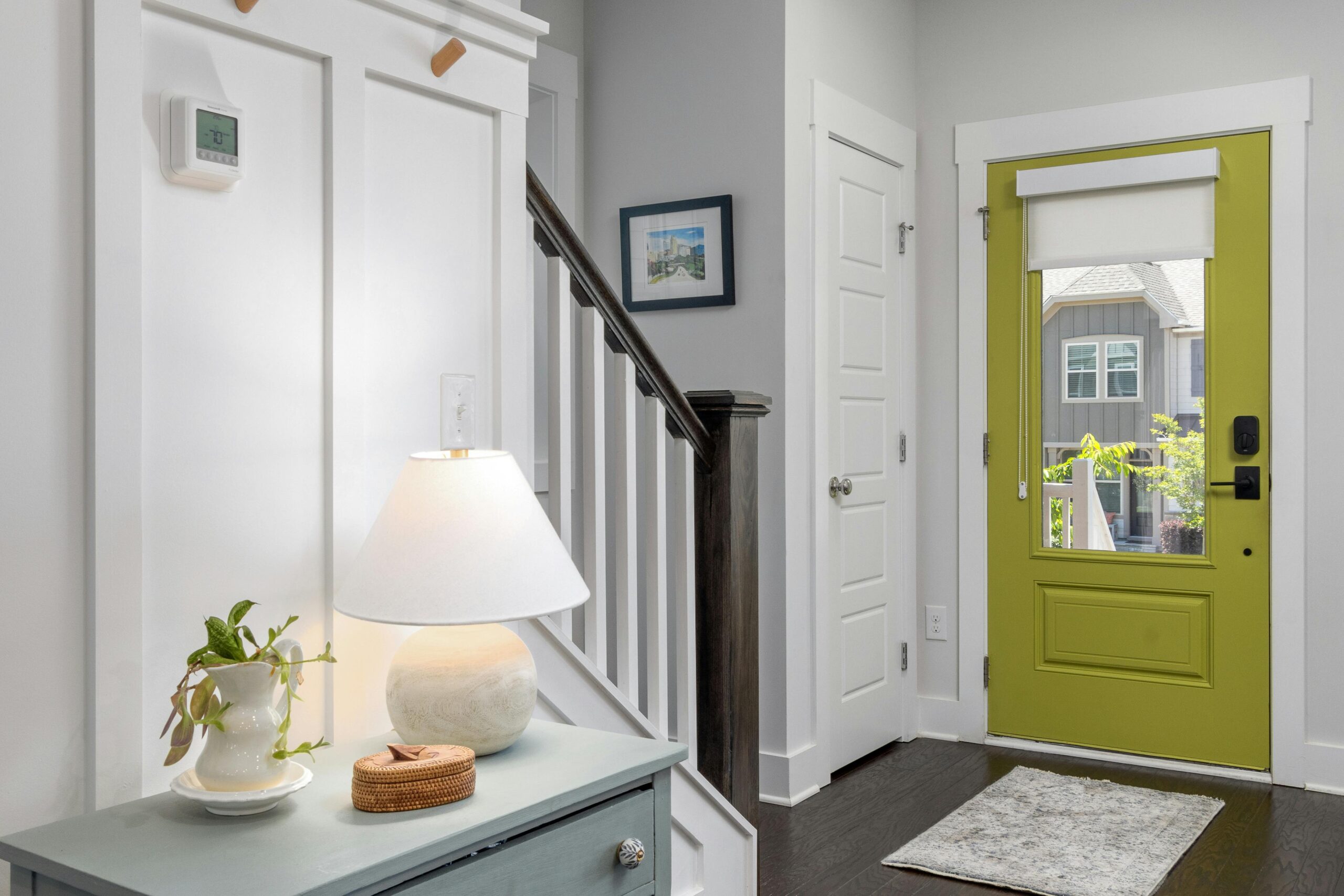
Most of the time, a thermostat is just… there.
It’s the little box on the wall you nudge up or down, and as long as the heat or AC eventually comes on, it’s easy to forget about it. But that small control has a big say in how comfortable your Ottawa home feels—and how much you spend on heating and cooling over the year.
At Noah’s Home Comfort, we see a little bit of everything when it comes to thermostats:
- Older mechanical dials that are hard to set accurately
- Basic digital stats with no scheduling at all
- Thermostats tucked in odd locations—like right by a drafty door or in a hot hallway
- Newer smart thermostats that were never actually set up properly
In this blog, I’ll walk you through how we think about thermostats, and how to tell when it’s time to say, “Okay, this old one has done its job—it’s time to upgrade.”
We’ll cover:
- Signs your thermostat is holding your comfort back
- What a modern or smart thermostat actually does differently
- When an upgrade makes sense (and when it might not be the first priority)
- How we help you choose, place, and set up a thermostat that fits your home and lifestyle
Why Your Thermostat Matters More Than You Think
Your thermostat is the brain of your heating and cooling system. It decides:
- When the furnace, boiler, or heat pump turns on and off
- How long the system runs
- How closely indoor temperature tracks your comfort targets
Even if your furnace or AC is in great shape, a poorly placed or outdated thermostat can still cause:
- Rooms that feel too hot or too cold
- Bigger temperature swings than necessary
- Extra runtime and higher bills
- Constant manual adjusting (“thermostat battles” in the house)
So when we talk about overall home comfort, we don’t just talk about equipment in the basement—we talk about the control on the wall that runs it all.
Signs Your Old Thermostat Might Be Ready to Retire
Not every home needs the fanciest smart thermostat on the market. But if you’re seeing these signs, it may be time to seriously consider an upgrade.
1. You’re Constantly Adjusting It
If you find yourself:
- Walking over to the thermostat multiple times a day
- Turning it way up when you’re cold and way down when you’re warm
- Feeling like the system is always “chasing” your comfort
it’s usually a sign that your thermostat isn’t set up to match your routine, or that it doesn’t have the features to keep up.
A modern programmable or smart thermostat can:
- Follow schedules that match your daily life
- Reduce big temperature swings
- Keep your home more consistently comfortable with fewer manual changes
2. It’s Hard to Read or Set Precisely
Older thermostats might only have:
- A tiny slider or dial
- A small, dim display
- No clear way to see the exact temperature setting
If you’re squinting at the wall trying to figure out if it’s at 20°C or 23°C, that’s not helping your comfort or efficiency.
Newer thermostats:
- Show clear digital numbers
- Often have backlit displays
- Let you make precise adjustments in small increments
3. It Has No Scheduling or Very Basic Programming
If your thermostat can’t:
- Run different weekday and weekend schedules
- Adjust automatically when you’re typically away or asleep
- Adapt to your changing routine
you’re missing out on a big part of what modern thermostats do well.
Instead of remembering to turn the temperature down every night or every time you leave, a good thermostat can do that for you—without sacrificing comfort.
4. The Thermostat Is in a Bad Location
Even the best thermostat won’t perform well if it’s:
- Right next to a drafty door
- In direct sunlight
- On a wall shared with a chimney or other warm surface
- Tucked in a hallway that doesn’t represent the temperature in the main living areas
If your thermostat is in a poor location, it might think the home is warmer or cooler than it really is, and you’ll feel that in the rest of the house.
When we look at thermostat upgrades, we always consider location as part of the conversation.
5. You’ve Upgraded Your Heating/Cooling, But Not the Controls
If you’ve recently:
- Installed a new furnace, heat pump, or AC
- Reworked parts of your duct system
- Made changes to how your home is used
but you’re still using an old, basic thermostat, a control upgrade can help you get more value out of your new equipment.
What a Modern or Smart Thermostat Actually Does Differently
There’s a lot of marketing around smart thermostats, but at the core, the main improvements are:
- Better scheduling and control
- More precise temperature management
- Integration with how you actually live
Here’s how that looks in everyday life.
Smarter Scheduling
Instead of a single “set and forget” temperature or clunky programming, a modern thermostat can:
- Run different weekday and weekend schedules
- Set daytime and nighttime temperatures
- Warm the house before you wake up, instead of you turning it up after you’re already cold
The idea is to have your home feel right when you need it, without having to constantly think about the thermostat.
Remote Access and Monitoring (For Smart Models)
Some smart thermostats let you:
- Check and adjust your home’s temperature from your phone or tablet
- Get alerts if the temperature drops unexpectedly (which can help protect from frozen pipes)
- Make small adjustments on the go if your plans change
This can be especially helpful if you:
- Travel often
- Have a cottage or secondary property
- Want to keep an eye on your home while you’re away
Learning and Adaptive Features (Depending on Model)
Some smart thermostats can:
- Notice how long it takes your home to heat up or cool down
- Start the system early so the house reaches your target temperature by the time you’ve set
- Help smooth out temperature swings
Others can provide reports or suggestions about:
- How often your system is running
- Small changes that might help with efficiency
We’re always careful to match features to the homeowner—some people love detailed reports and app control, others just want clear buttons and simple schedules. Both are valid.
When a Thermostat Upgrade Makes Sense (and When It’s Secondary)
We’re honest about this: a new thermostat isn’t magic. It’s a tool that works best as part of a bigger comfort picture.
Great Times to Upgrade
We often recommend a new thermostat when:
- You’re replacing your furnace, AC, or heat pump
- You’re dealing with noticeable temperature swings or comfort issues
- Your current thermostat is malfunctioning or inaccurate
- You’re ready to take advantage of scheduling and better control
In these cases, pairing new equipment with a modern thermostat lets us design a system that works well as a whole.
When It Might Not Be the First Priority
Sometimes, the real problem isn’t the thermostat at all. Before recommending an upgrade, we consider:
- Are there major duct issues or obvious airflow problems?
- Is the furnace or boiler very old or struggling?
- Does your home have serious insulation or air leak issues?
In those cases, we might say:
- “Let’s fix the bigger comfort issue first, and then a new thermostat can be the second step.”
We don’t believe in selling a fancy thermostat to control a system that really needs more fundamental attention.
How We Help You Choose the Right Thermostat for Your Home
With so many models on the market, choosing a thermostat can feel overwhelming. We simplify that by focusing on three questions:
- What kind of heating and cooling equipment do you have?
- Furnace only? Furnace + AC? Heat pump? Boiler with radiators?
- Not every thermostat works with every setup.
- How do you and your family actually live in the home?
- Are you home most of the day or out a lot?
- Do you like tech and apps, or do you prefer something simple and intuitive on the wall?
- What are your priorities?
- Maximum control and feedback?
- Simplicity and reliability?
- Some of both?
Based on that, we’ll recommend a thermostat that:
- Is compatible with your system
- Has the right level of features (not more than you’ll use, not less than you’ll appreciate)
- Fits your comfort and efficiency goals
Thermostat Placement: Getting the Location Right
A thermostat upgrade is also a good time to check whether it’s in the right spot.
We want it:
- On an interior wall, away from direct sun
- Not directly above or beside a supply vent
- Away from appliances or electronics that give off heat
- In an area that represents the average living conditions of the home
If your current thermostat is in a poor location, we can talk about:
- Whether moving it makes sense
- How that would be done
- What difference it could make to overall comfort
Even the best thermostat will struggle if it’s reading a temperature that doesn’t match your real living spaces.
Setting Up and Using Your New Thermostat Properly
A new thermostat is only as good as its setup.
When we install or help you upgrade, we don’t just put it on the wall and leave. We:
- Walk through the basic interface with you
- Help you set up initial schedules that match your routine
- Show you how to make simple changes without accidentally wiping everything out
- If it’s a smart thermostat, help you connect it to your Wi-Fi and app, if you’d like
We’re also happy to talk through:
- Realistic temperature ranges for comfort and efficiency
- How to avoid constantly making big swings that fight the system
- How your new thermostat works with things like humidifiers, HRVs, or zoning, if applicable
The goal is for you to feel confident using it, not intimidated by a new gadget.
Small Thermostat Tweaks That Can Improve Comfort Right Away
Even before you upgrade, or alongside a new thermostat, a few simple adjustments can help:
- Use gentle schedule changes instead of big jumps (for example, 1–2°C differences, not 5–6°C swings).
- Avoid turning the heat way up with the idea that it will warm the house faster—most systems don’t work that way; they run at the same power until the target is reached.
- Give the system time to respond before making another change.
- Make sure vents and returns are clear, so the thermostat’s commands can actually be carried out effectively.
When we visit, we’re happy to show you how to get more from your existing thermostat while we discuss whether a new one is worth it.
Call to Action
If you’re tired of constantly fiddling with your thermostat, dealing with uneven comfort, or wondering whether your old control is holding your system back, it might be time to talk about an upgrade.
We’d be happy to look at your current setup, your equipment, and how you use your home, then recommend a thermostat that actually fits your life.
Call Noah’s Home Comfort at (343) 227-6992 or email info@noahhomecomfort.com to schedule a thermostat and comfort consultation. We’ll help you decide whether it’s time to retire your old thermostat, and if it is, we’ll make sure your new one is installed, set up, and ready to keep your Ottawa home comfortable and efficient in every season.