As winter ends and warmer weather approaches across Ottawa East, many homeowners begin thinking less about their furnace. After all, the system made it through the cold season, and spring feels like a time to relax. However, at Noah’s Home Comfort, we often remind homeowners that spring is actually one of the smartest times to consider upgrading an aging furnace.
Homes in Orleans, Rockland, Clarence-Rockland, Cumberland, Embrun, Limoges, Casselman, Hammond, and St. Albert experience demanding winters that place heavy strain on heating equipment. By the end of the season, furnaces have endured months of continuous operation, and older systems often begin showing signs of decline.
Upgrading in spring allows homeowners to avoid winter emergencies, improve energy efficiency, and plan proactively instead of reacting during the coldest days of the year.
Why Aging Furnaces Become More Risky Over Time
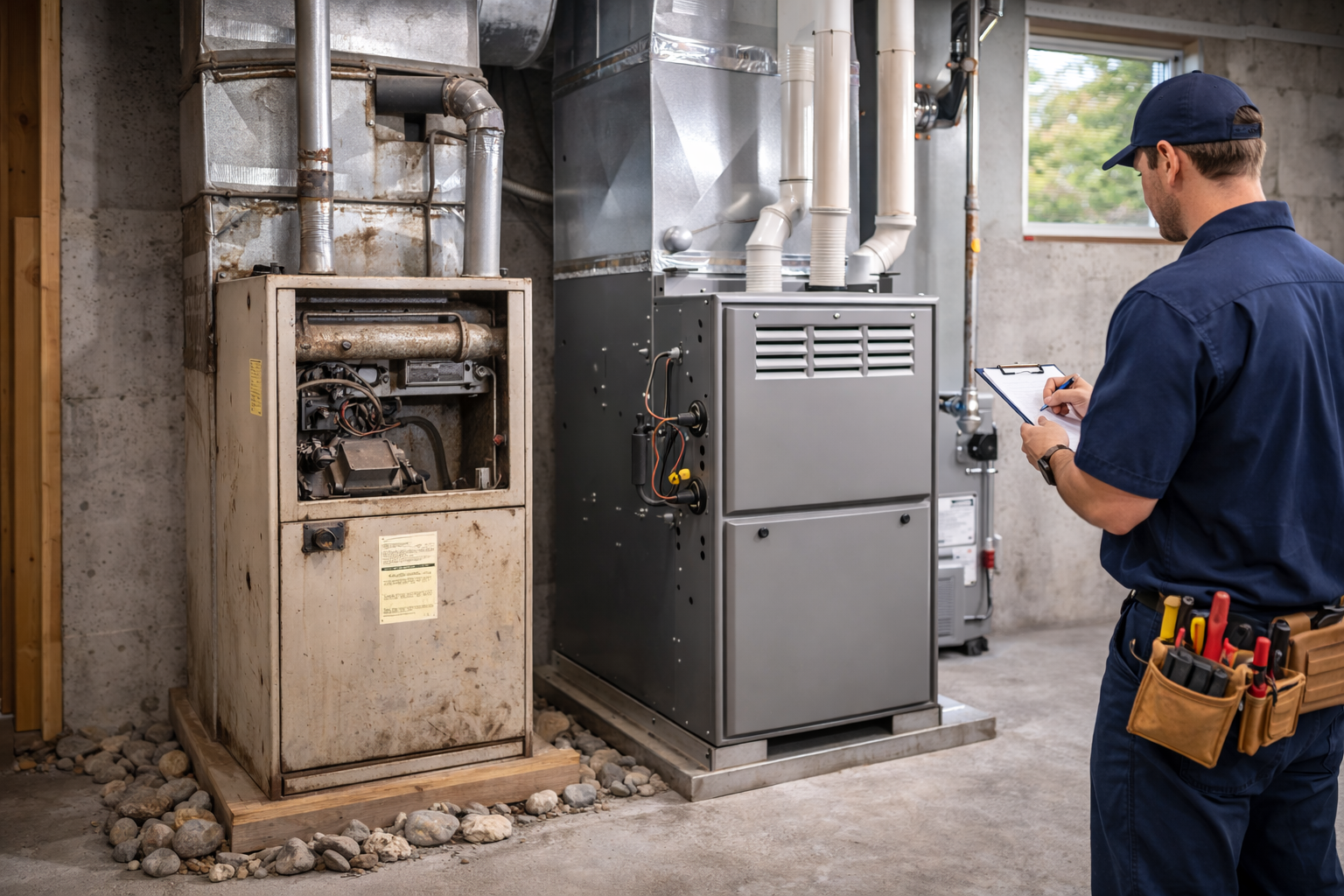
Furnaces are built to last, but they are not designed to operate forever. Over time, internal components wear down, efficiency decreases, and the likelihood of breakdown increases.
An aging furnace may still run, but it often operates with hidden weaknesses such as:
- Reduced airflow
- Inconsistent heating cycles
- Increased energy consumption
- Component fatigue
- Higher repair frequency
Homes in Rockland and Clarence-Rockland often experience additional wear due to wind-driven heat loss that forces longer heating cycles. Rural properties in Hammond, St. Albert, Limoges, and Casselman may place even greater demand on furnaces because of overnight cooling and open exposure.
Spring is the ideal time to assess whether an older system is still reliable enough for another winter.
Signs a Furnace May Be Near the End of Its Lifespan
Many homeowners are unsure when replacement becomes the better option. While every system is different, common warning signs include:
- Furnace repairs becoming more frequent
- Uneven heating throughout the home
- Rising heating bills year after year
- New noises such as rattling or humming
- Short cycling during mild weather
- Reduced airflow from vents
Homes in Orleans and Embrun with larger layouts often notice these issues first in distant rooms where airflow becomes weaker.
If these symptoms appear near the end of winter, spring is the best time to plan an upgrade before the next heating season arrives.
Why Spring Is Better Than Winter for Furnace Replacement
Many homeowners wait until their furnace fails during winter before considering replacement. Unfortunately, this creates unnecessary stress and urgency.
Spring offers major advantages:
- No emergency pressure during extreme cold
- More flexible scheduling
- Time to evaluate options carefully
- Better preparation for the next winter
- Reduced risk of sudden breakdowns
Homes in Cumberland, Casselman, and Hammond benefit especially from proactive replacement because rural exposure means a winter furnace failure can quickly become dangerous due to rapid heat loss.
Planning ahead in spring is always easier than reacting in January.
Energy Efficiency Gains Are Significant
Older furnaces often operate far less efficiently than newer systems. Even if the furnace still produces heat, it may consume more fuel than necessary.
Efficiency improvements can lead to:
- Lower monthly heating bills
- Reduced system strain
- More consistent comfort
- Better airflow distribution
Homes across Ottawa East frequently see noticeable cost savings after upgrading older heating equipment.
In larger homes in Rockland and Embrun, improved efficiency can make an even bigger difference because heating demand is higher.
Comfort Improvements Matter as Much as Efficiency
An aging furnace may heat the home unevenly, leaving certain rooms uncomfortable.
Upgrading can improve:
- Temperature consistency between floors
- Airflow strength from vents
- Basement comfort
- Overall indoor air quality
Homes in Orleans with open-concept designs often experience warm upper levels but cooler lower areas when older furnaces struggle with airflow.
Newer systems provide more reliable circulation, improving comfort throughout the home.
Older Furnaces Often Require More Repairs
As furnaces age, repair frequency increases. Components such as ignitors, flame sensors, blower motors, and control boards experience wear after years of operation.
Late-winter repair patterns often indicate replacement is approaching.
Homes in Clarence-Rockland and St. Albert frequently experience higher repair demand because colder exposure forces furnaces to work harder over time.
Spring replacement prevents repeated repair costs from adding up over another winter.
Spring Replacement Helps Protect Plumbing Systems
Heating reliability affects more than comfort — it protects plumbing systems.
A furnace failure in winter can lead to:
- Frozen pipes
- Burst plumbing
- Basement flooding
- Water damage
Homes in Cumberland, Hammond, Limoges, and Casselman face increased plumbing vulnerability due to colder basements and longer pipe runs.
Upgrading in spring ensures the home is protected before the next cold season returns.
Indoor Air Quality Benefits of Modern Systems
Newer furnace systems often improve filtration and airflow, which supports better indoor air quality.
Homeowners may notice:
- Less dust circulation
- Reduced dryness
- Improved comfort breathing indoors
- Better humidity balance
Homes in Rockland, Orleans, and Embrun often experience noticeable air quality improvement after upgrading older equipment.
Spring is the perfect time to address both comfort and air health.
Why Waiting Another Year Can Be Risky
Many homeowners consider waiting “one more winter.” Unfortunately, furnaces rarely fail at convenient times.
Waiting increases risk of:
- Emergency breakdowns during extreme cold
- Higher repair costs
- Unplanned replacement decisions
- Reduced winter comfort
- Increased energy waste
Homes in Hammond, St. Albert, and Casselman are especially vulnerable because winter heating is essential for safety as well as comfort.
Spring planning reduces uncertainty and avoids last-minute emergencies.
How We Help Homeowners Plan Furnace Upgrades
At Noah’s Home Comfort, we guide homeowners through furnace replacement decisions with a focus on comfort, efficiency, and long-term reliability.
We consider:
- Home size and layout
- Airflow needs
- Basement heating challenges
- Seasonal comfort patterns
- Equipment age and condition
Every home in Orleans, Rockland, Clarence-Rockland, Cumberland, Embrun, Limoges, Casselman, Hammond, and St. Albert has unique heating requirements, and local experience matters.
Local Knowledge Makes the Difference
Ottawa East winters place unique demands on heating systems.
We understand:
- Wind-driven heat loss in Rockland
- Rural exposure in Hammond and St. Albert
- Basement cold zones in Cumberland
- Open-concept airflow challenges in Orleans
- Long duct systems in Embrun and Limoges
This regional expertise ensures furnace upgrades are tailored to real local conditions.
Final Thoughts: Spring Is the Best Time to Upgrade Proactively
Spring is not just the end of heating season — it is the beginning of preparation for the next one. Upgrading an aging furnace now helps homeowners avoid winter emergencies, reduce energy costs, and improve comfort throughout the home.
For families in Orleans, Rockland, Clarence-Rockland, Cumberland, Embrun, Limoges, Casselman, Hammond, and St. Albert, proactive replacement is one of the smartest home comfort investments of the year.
Professional Call-to-Action
For expert furnace evaluations, replacement planning, and heating upgrades across Ottawa’s east end,
Call Noah’s Home Comfort at (343) 227-6992 or email info@noahhomecomfort.com.