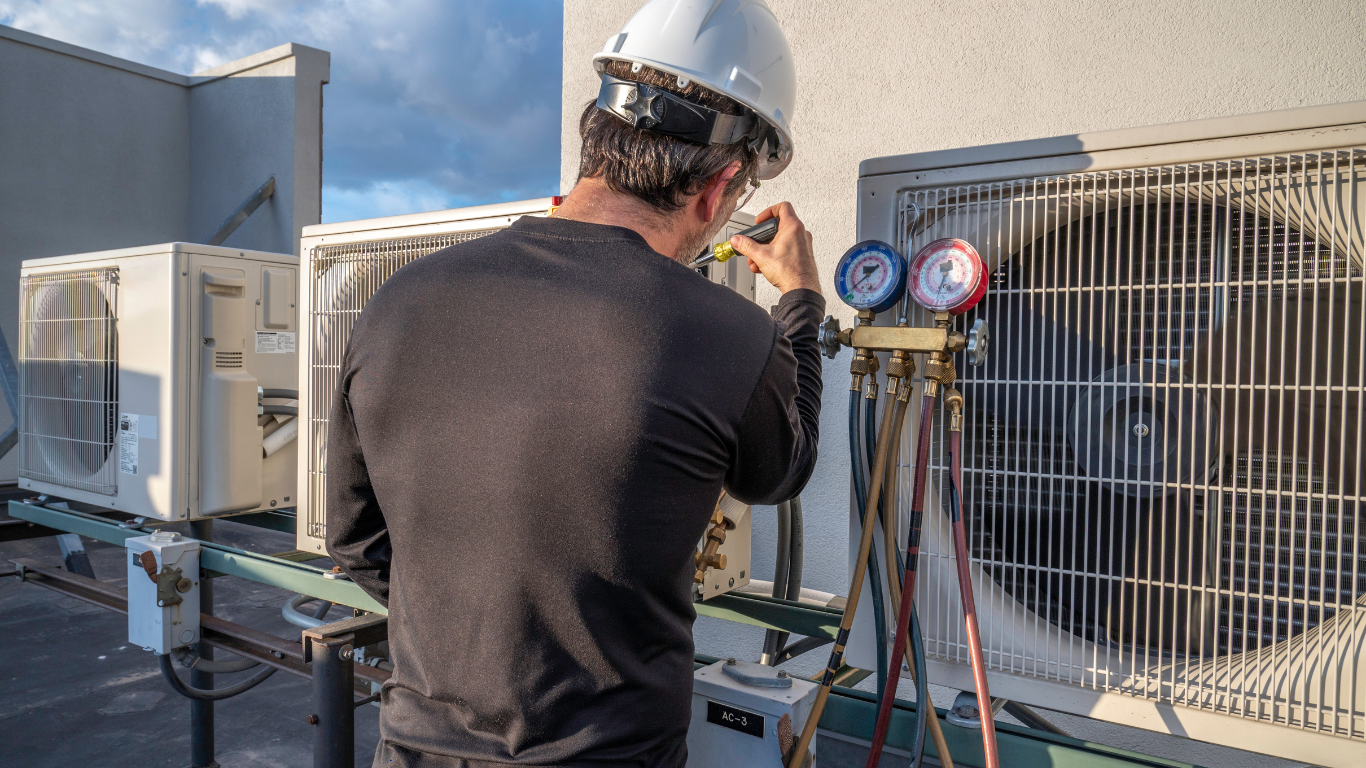
September in Ottawa can be confusing for your home—and for your thermostat.
One day it’s warm and sunny, the next day it’s cool and damp. Mornings feel chilly, afternoons feel like summer again, and you might find yourself asking:
- “Should I turn the heat on yet?”
- “Why is my AC running when I’m in a sweatshirt?”
- “How do I keep the house comfortable without wasting energy going back and forth?”
At Noah’s Home Comfort, we think of September as transition month. It’s the time when your home moves from cooling mode toward heating mode, and a few simple choices can make that shift smoother, more comfortable, and more efficient.
In this blog, we’ll walk through how we help homeowners:
- Switch from cooling to heating without energy waste
- Use thermostats and fans more strategically
- Get ready for the first real heating days
- Avoid common comfort mistakes during this in-between period
Our goal is to help you feel comfortable and confident that you’re not throwing energy (and money) out the window.
Why September Is Tricky for Comfort and Energy Use
In the middle of summer, it’s simple: the air conditioner runs when it’s hot. In the middle of winter, the furnace runs when it’s cold. September is different.
Temperature Swings and Shoulder Season
In early fall, we often see:
- Cool, crisp mornings
- Warm, sometimes hot, afternoons
- Evenings that cool off quickly after sunset
Inside the house, that can translate to:
- Cold-feeling bedrooms when you wake up
- A comfortable or even warm main floor by midday
- A desire to turn the heat and the AC on—sometimes in the same 24 hours
Without a plan, that leads to:
- Frequent thermostat changes
- Systems cycling more than they need to
- Energy being used to correct problems that could have been avoided with small adjustments
This is where a thoughtful transition strategy really helps.
Step 1: Define Your Comfort Priorities for the Month
Before we start changing settings, it’s helpful to think about what matters most to you and your household during this in-between season.
We often ask homeowners questions like:
- Do you prefer the house a bit cooler or warmer overall?
- Is morning comfort the priority, or are you more concerned about evenings?
- Are people home during the day, or is the house often empty?
- Are there kids, seniors, or people working from home who are more sensitive to temperature swings?
Once we understand your priorities, we can tailor suggestions so your system supports your real life, not just a theoretical temperature.
Step 2: Review Your Thermostat Mode and Schedules
Your thermostat is the “brain” of your comfort system. In September, it’s a good idea to revisit both mode and schedule.
Check Your Operating Mode
Most thermostats have modes like:
- Cool – For air conditioning
- Heat – For furnace or heating system
- Auto/Heat-Cool – Some models automatically switch between heating and cooling
We can help you decide which makes the most sense for your home, but in general:
- If September is still quite warm during the day, you may stay in Cool mode a little longer, but use higher setpoints so the AC runs less.
- As nights become consistently cool, you may want to switch to Heat and rely more on temperature control, blankets, and clothing layers to bridge the warm afternoons.
- If your thermostat supports automatic heat/cool changeover, we’ll help you set reasonable heating and cooling setpoints so the system doesn’t “fight” itself (cooling and heating in the same day unnecessarily).
Update Your Schedule for the Season
If you have a programmable or smart thermostat, September is the time to:
- Adjust wake/sleep times for back-to-school and work routines
- Modify daytime setpoints if more or fewer people are home
- Choose slightly more moderate temperatures that work for both cool mornings and mild afternoons
We can also help you fine-tune schedules so your system:
- Doesn’t over-cool the home on mild days
- Doesn’t overheat it when you just need a bit of warmth in the morning
Small changes here can make a noticeable difference in both comfort and energy use.
Step 3: Avoid the “Window Open, System Running” Problem
One of the most common ways energy gets wasted in September is simple:
- The furnace or AC is running.
- Windows are wide open at the same time.
We understand the appeal of fresh air—especially after a long summer of closed windows and constant AC. The key is to coordinate fresh air with how your system is operating.
Simple Guidelines
- If you want to open windows during a mild day, consider turning the system off or setting the thermostat so it’s unlikely to come on.
- Avoid opening windows right next to a thermostat, which can confuse the system about what’s really happening in the rest of the house.
- When evenings cool off, you might use cool night air through open windows instead of running the AC—then close windows in the morning to help retain that coolness.
We can talk through how this fits with your specific home and habits, so you’re getting the best of both worlds: fresh air when you want it, and systems that aren’t working against you.
Step 4: Use Your Fan Settings to Your Advantage
Your system’s fan can be a big asset in a transition month.
Most thermostats have a fan setting with at least two options:
- Auto – Fan runs only when heating or cooling is actively on.
- On – Fan runs continuously, circulating air even when the system isn’t heating or cooling.
Some smart thermostats have additional fan runtime options, like running the fan a certain number of minutes each hour.
How the Fan Helps in September
In a shoulder season like September, using the fan wisely can:
- Mix warm and cool air between floors
- Even out temperatures between rooms
- Make the house feel more comfortable at a wider range of thermostat settings
For example:
- On a cooler morning that warms up later, running the fan can help distribute residual warmth from lower levels to slightly cooler upstairs rooms.
- On a warm afternoon, the fan can help spread AC-cooled air more evenly without running the compressor as often.
We can show you how to use your fan settings so they help comfort and efficiency, rather than just adding runtime for no reason.
Step 5: Change Filters at the Season Change
The transition between summer and fall is an excellent time to change your HVAC filter.
Over the cooling season, filters capture:
- Dust
- Pollen and outdoor particles
- Indoor particles from daily life
By September, especially if the AC has run a lot, your filter may be:
- Holding more debris than you’d expect
- Restricting airflow
- Contributing to reduced comfort and efficiency
Starting the heating season with a fresh filter:
- Supports better airflow
- Helps your furnace or air handler work more smoothly
- Improves indoor air quality as windows are closed more often
We can help you choose the right filter type and set a simple schedule for changing it through both fall and winter.
Step 6: Test Your Heating System Before You Really Need It
In September, you might still be thinking mostly about cooling—but it’s also the best time to test your heating system.
We recommend:
- Turning your furnace or heating system on for a short test run on a cool day or evening.
- Listening for any unusual noises.
- Noticing any strong or unusual smells.
- Walking around to check that warm air is coming from vents as expected.
If something doesn’t feel right—no heat, strange sounds, persistent burning smells—it’s much easier to call us for a check-up in September than to wait until the first genuinely cold night when everyone is calling at once.
A fall furnace inspection at this time can help you:
- Catch small issues before they become serious problems
- Improve efficiency heading into winter
- Reduce the risk of unexpected breakdowns
Step 7: Fine-Tune Room-by-Room Comfort
Transition months are also a good time to address those nagging comfort problems you may have noticed over the summer—and which will show up again in winter.
We look at:
- Hot or cold bedrooms, especially on upper floors
- Drafty or under-heated rooms that were under-cooled in summer
- Vents that are too loud or too weak
- Areas that always feel stuffy or stale
By adjusting:
- Duct dampers
- Register positions
- Airflow balance between floors
- Thermostat settings and fan usage
we can often make your home feel more consistent from room to room. That way, you’re not constantly chasing comfort with big thermostat swings or “on/off” decisions that ultimately use more energy.
Step 8: Know When It’s Time for a Professional Check-Up
You don’t need us for every small adjustment—but there are times when a professional visit is the right call, especially in a transition month.
It’s a good idea to call us if:
- Your AC is still struggling even on mild days.
- The furnace test run produced strange noises or persistent smells.
- Some rooms are consistently uncomfortable no matter what you do with vents or the thermostat.
- You’re not sure what mode or settings make the most sense, and you feel like the system is overworking.
When we visit in September, we can:
- Inspect and service your heating system for the season ahead.
- Take a quick look at how your cooling system held up over the summer.
- Help you optimize thermostat and fan settings for shoulder-season efficiency.
- Talk through any comfort issues you’ve noticed and recommend practical steps.
Our aim is to help you move from summer to fall smoothly, without surprises.
How We Help You Through the Transition Month
When you invite us in during September, we approach your home with the transition in mind:
- Listen to your experience
We start by asking how the home felt over the summer and what you’re noticing as temperatures start to shift. - Look at both sides of your system
We consider cooling and heating together, not as separate worlds. How your AC and ductwork behaved in July can tell us a lot about how your furnace will behave in January. - Review thermostat and fan usage
We walk you through how your current thermostat is set up, and suggest changes that make sense for your routine and comfort. - Check the fundamentals
Filters, airflow, vent placement, equipment condition—these basics make a huge difference in both comfort and efficiency. - Give clear, realistic recommendations
From small tweaks to suggested maintenance, we prioritize steps that will help the most, based on your budget and plans for the home.
We want your home to feel comfortable and easy to manage, not like a constant balancing act between freezing and overheating.
Call to Action
If September has you flipping between AC and heat, or you’re not sure how to set things up for comfort without wasting energy, we’d be happy to help you through the transition.
Call Noah’s Home Comfort at (343) 227-6992 or email info@noahhomecomfort.com to schedule a transition-season comfort and system check. We’ll look at your cooling and heating setup, thermostat and fan settings, and overall airflow, then give you practical, tailored advice to keep your Ottawa home comfortable and efficient as you move from summer into fall.